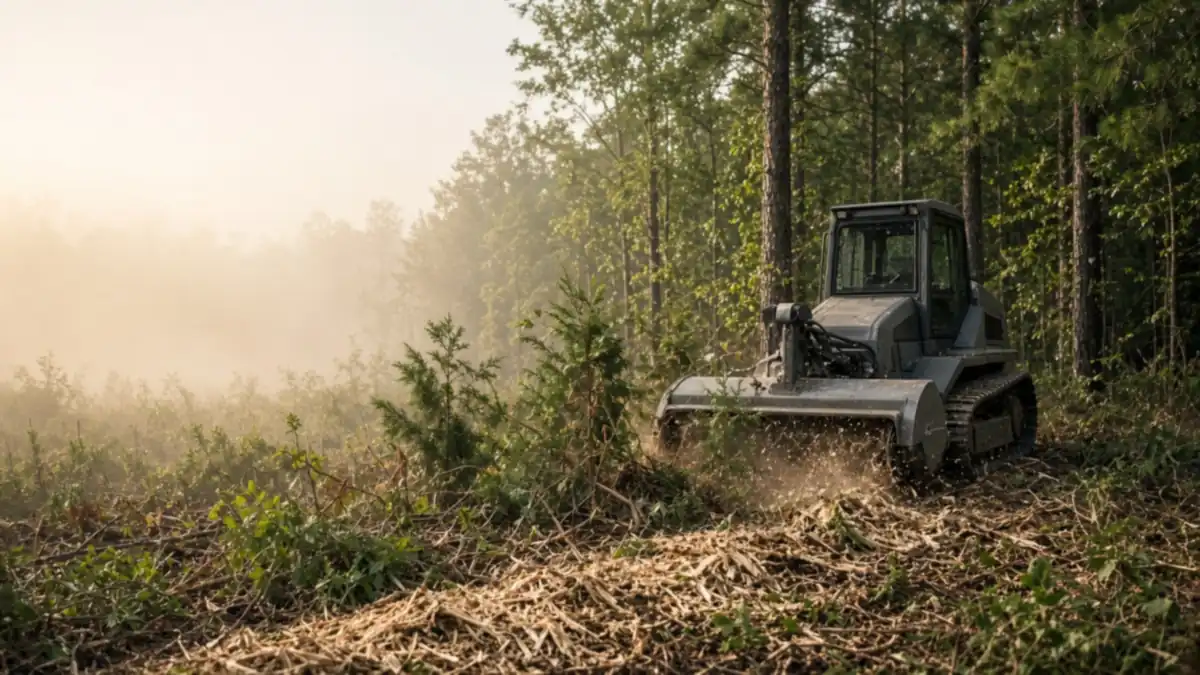
Where we take forestry mulching requests
Contractors we work with generally serve Little Rock, Pulaski County and surrounding central Arkansas. If your property isn't listed, send the request anyway.
Pulaski, Saline, Faulkner and Lonoke counties are the core area, with requests welcome from Perry, Grant and White counties.
Little Rock
West Little Rock, the Chenal and Pinnacle areas, and the rural southwest edge of the county.
North Little Rock and Sherwood
North of the river, with acreage toward Gravel Ridge.
Maumelle
Northwest Pulaski County, near Lake Maumelle and the Arkansas River.
Jacksonville and Cabot
Northeast toward Lonoke County, with many acreage properties.
Conway and Mayflower
Faulkner County, to the northwest.
Greenbrier and Vilonia
Northern Faulkner County, with rolling wooded acreage.
Benton and Bryant
Saline County, southwest along I-30.
Hensley and Mabelvale
Southern Pulaski County.
Roland and Ferndale
West of Little Rock, toward Lake Maumelle and the Ouachita foothills.
Lonoke and Ward
Lonoke County, to the east.
Alexander
Pulaski and Saline county line, southwest of Little Rock.
Scott and England
Southeast Pulaski and Lonoke counties, flatter farm country.
Land clearing in central Arkansas
Central Arkansas sits where the Ouachita foothills meet the Arkansas River valley and the flatter Delta country to the east. West and northwest of Little Rock, around Hensley, Roland, Paron and Perryville, expect rocky, sloping ground and mixed pine and hardwood forest. East toward Lonoke, Cabot and England, ground tends to be flatter and wetter. Terrain and soil wetness strongly affect how fast a mulcher can work and whether it can work at all after heavy rain.
Rain is the main scheduling factor. Central Arkansas gets plenty of it, and saturated ground can rut badly under tracked machines. Many contractors prefer drier months, and some won't work wet clay at all. If your timeline is flexible, say so; you may get earlier or better pricing in a contractor's slower season.
Mulching is often an alternative to burning, but if you plan any burning of debris, check for burn bans. Counties in Arkansas issue burn bans during dry periods, and the Arkansas Department of Agriculture's Forestry Division tracks wildfire danger. Mulching leaves no burn piles, which is one reason landowners near homes and subdivisions prefer it.
Watch out for creeks and wet areas. Clearing along streams and in wetlands can trigger state or federal rules, and leaving a vegetated buffer next to water reduces erosion. If your land has a creek, pond or wetland area, mention it so the contractor can plan around it.
Property buyers in fast-growing areas like Cabot, Bryant, Benton and Conway often clear land for a new home, while longtime landowners in places like Lonoke, England and Scott tend to reclaim pasture, cut fence lines or open hunting land. Subdivisions and cities may have their own rules about tree removal, clearing near property lines, or erosion control during construction, so check with your city or county if your land is inside city limits or part of a subdivision with covenants.
Coverage depends on which independent providers are available for your location and job. We can't promise every request will be matched. Free matching service by Voraus LLC. We connect you with independent local forestry mulching contractors. We are not a forestry mulching contractor and do not perform the work.
Ready to get your forestry mulching project moving?
A quick description is enough: "About 6 acres near Benton, mostly cedar and briars, want to clear for pasture and keep the big oaks, any time this fall."